
Classifieds site for the sale of historic, vintage, and collectible vehicles
Vintage cars for sale
Historic cars for sale
Collectible cars for sale
Vintage motorcycles for sale
NEED HELP?
help@mithosmarket.com
OPENING HOURS
Monday - Friday: 09:00 - 17:30
Saturday - Sunday: CLOSED



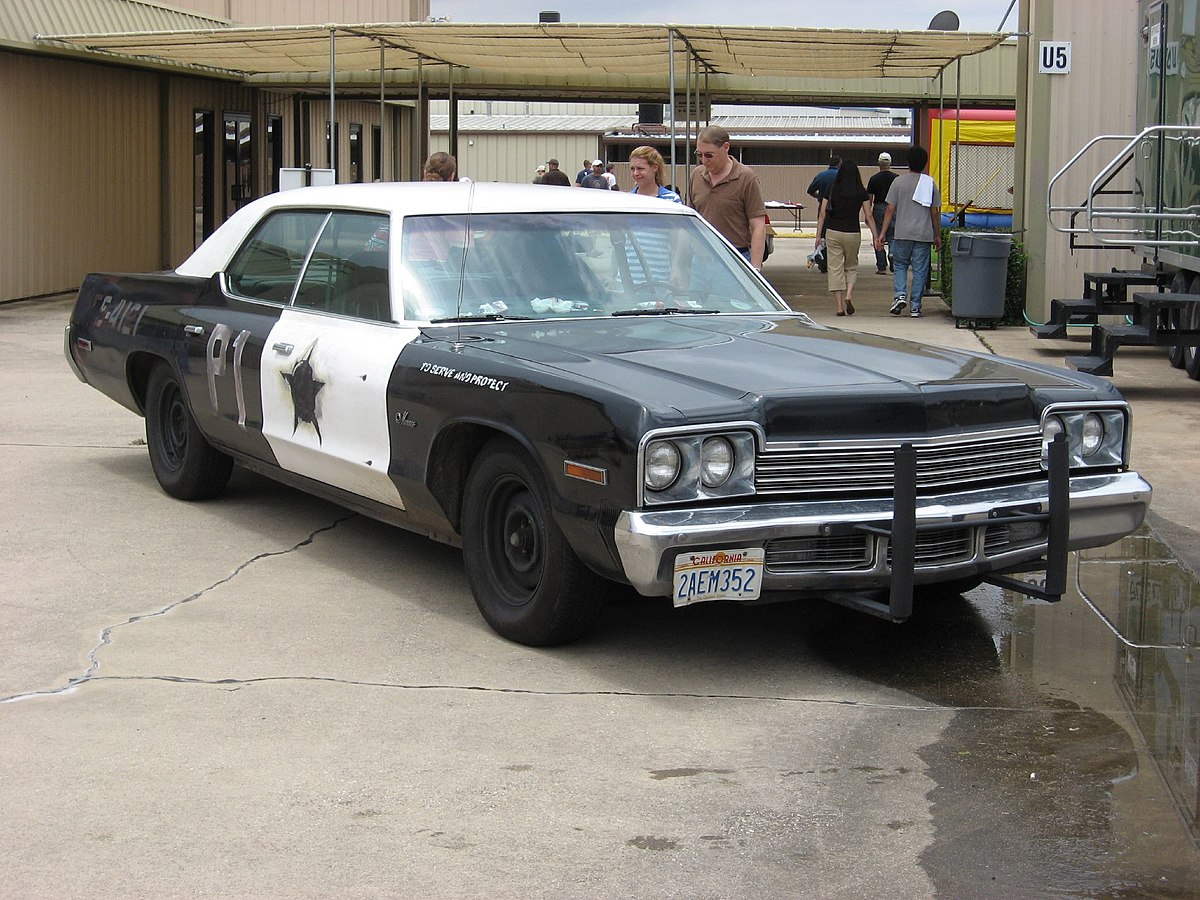
Dodge Monaco 440 - Bluesmobile
Tv Serie s Blues Brothers
The Blues Brothers is a 1980 American musical action comedy film directed by John Landis. It stars John Belushi as "Joliet" Jake Blues and Dan Aykroyd as his brother Elwood, characters developed from the recurring musical sketch "The Blues Brothers" on NBC's variety series Saturday Night Live. The script is set in and around Chicago, Illinois, where it was filmed, and the screenplay is by Aykroyd and Landis. It features musical numbers by singers James Brown, Cab Calloway, Aretha Franklin, Ray Charles and John Lee Hooker. It features non-musical supporting performances by Carrie Fisher and Henry Gibson.
The story is a tale of redemption for paroled convict Jake and his blood brother Elwood, who set out on "a mission from God" to prevent the foreclosure of the Roman Catholic orphanage in which they were raised. To do so, they must reunite their R&B band and organize a performance to earn the $5,000 needed to pay the orphanage's property tax bill. Along the way, they are targeted by a homicidal "mystery woman", neo-Nazis, and a country and western band—all while being relentlessly pursued by the police.
Universal Pictures, which won the bidding war for the film, was hoping to take advantage of Belushi's popularity in the wake of Saturday Night Live, the film Animal House, and the Blues Brothers' musical success; it soon found itself unable to control production costs. The start of filming was delayed when Aykroyd, who was new to film screenwriting, took six months to deliver a long and unconventional script that Landis had to rewrite before production, which began without a final budget. On location in Chicago, Belushi's partying and drug use caused lengthy and costly delays that, along with the destructive car chases depicted onscreen, made the film one of the most expensive comedies ever produced.
Owing to concerns that the film would fail, its initial bookings were less than half of those similar films normally received. Released in the United States on June 20, 1980, it received mostly positive reviews from critics and grossed over $115 million in theaters worldwide before its release on home video, and has become a cult classic over the years. A sequel, Blues Brothers 2000, was released in 1998. In 2020, The Blues Brothers was selected for preservation in the United States National Film Registry by the Library of Congress as "culturally, historically, or aesthetically significant".
Plot
Jake Blues, a blues vocalist and petty criminal, is paroled from prison after serving three years of a five-year sentence for armed robbery and is picked up by his brother Elwood in his Bluesmobile, a battered former police car. Elwood demonstrates its capabilities by jumping an open drawbridge. The brothers visit the Catholic orphanage where they were raised, and learn from Sister Mary Stigmata that it will be closed unless it pays $5,000 in property taxes. During a sermon by the Reverend Cleophus James at the Triple Rock Baptist Church, Jake has an epiphany: they can reform their band, the Blues Brothers, which disbanded while Jake was in prison, and raise the money to save the orphanage.
That night, state troopers attempt to arrest Elwood for driving with a suspended license due to 116 parking tickets and 56 moving violations. The brothers escape after a car chase through the Dixie Square Mall. The next morning, as the police arrive at the flophouse where Elwood lives, a mysterious woman detonates a bomb that demolishes the building, but leaves Jake and Elwood unharmed, saving them from arrest.
Jake and Elwood begin tracking down members of the band. Five of them are performing as "Murph and the Magic Tones" at a deserted Holiday Inn lounge and quickly agree to rejoin. Another turns them down as he is the maître d' at an expensive restaurant, but the brothers threaten to become regular patrons until he relents. On their way to meet the final two band members, the brothers find the road through Jackson Park blocked by an American Nazi Party demonstration on a bridge; Elwood runs them off the bridge into the East Lagoon. The leader of the Nazi Party swears revenge. The last two band members, who now run a soul food restaurant, rejoin the band against the advice of one's wife. The reunited group obtains instruments and equipment from Ray's Music Exchange in Calumet City, and Ray, "as usual", takes an IOU.
As Jake attempts to book a gig, the mystery woman blows up his phone booth; once again, he is miraculously unhurt. The band stumbles onto a gig at Bob's Country Bunker, a honky-tonk in Kokomo, Indiana. They win over the rowdy crowd, but run up a bar tab higher than their pay, and infuriate the Good Ole Boys, the country band booked for the gig.
Realizing they need a big show to raise the necessary money, the brothers persuade their old agent to book the Palace Hotel Ballroom, north of Chicago. They mount a loudspeaker atop the Bluesmobile and drive around the Chicago area promoting the concert—and alerting the police, the neo-Nazis, and the Good Ole Boys of their whereabouts. The ballroom is packed with blues fans, police officers, and the Good Ole Boys. Jake and Elwood perform two songs, then sneak offstage, as the tax deadline is rapidly approaching. A record company executive offers them a $10,000 cash advance on a recording contract—more than enough to pay off the orphanage's taxes and Ray's IOU—and then tells the brothers how to slip out of the building unnoticed. As they escape via an electrical riser and a service tunnel, they are confronted by the mystery woman: Jake's vengeful ex-fiancée. After her volley of M16 rifle bullets leaves them once again miraculously unharmed, Jake offers a series of ridiculous excuses that she rejects, but when she looks into his eyes she takes interest in him again, allowing the brothers to escape to the Bluesmobile.
Jake and Elwood race back toward Chicago, with dozens of state and local police and the Good Ole Boys in pursuit. They elude them all with a series of improbable maneuvers, including a miraculous gravity-defying escape from the neo-Nazis. At the Richard J. Daley Center, they rush inside the adjacent Chicago City Hall building, followed by hundreds of law enforcement officers, firefighters, and the National Guard. The brothers find the office of the Cook County Assessor and pay the tax bill. Just as their receipt is stamped, they are arrested by the mob of law officers. In prison, the band plays "Jailhouse Rock" for the inmates.